While Moringa oleifera has been used in traditional medicine systems like Ayurveda and Unani for millennia, modern science is now validating many of its purported benefits through rigorous, peer-reviewed research. Let's explore what the scientific literature tells us about this remarkable plant.
"Moringa oleifera is one of the most comprehensively studied botanical species, with over 1,300 published studies examining its nutritional composition and potential health applications." — National Institutes of Health Database
Comprehensive Nutritional Analysis
Multiple peer-reviewed studies have analyzed the nutritional composition of Moringa oleifera leaves using advanced techniques including HPLC (High-Performance Liquid Chromatography) and mass spectrometry.
Macronutrient Profile
A comprehensive analysis published in the Journal of Food Science and Technology revealed the following composition (per 100g of dried leaf powder):
- Protein: 27-30% by dry weight — remarkably high for a plant source
- Dietary Fiber: 19-25% — supports digestive health and satiety
- Healthy Fats: 2-7% — including omega-3 and omega-6 fatty acids
- Carbohydrates: 38-40% — primarily complex carbohydrates and fiber
Complete Amino Acid Profile
Moringa contains all 9 essential amino acids, making it a complete protein source — exceptionally rare in the plant kingdom. Essential amino acids identified include:
- Leucine, Isoleucine, Valine (BCAAs for muscle health)
- Lysine (crucial for calcium absorption and collagen formation)
- Methionine (important for detoxification)
- Phenylalanine (precursor to neurotransmitters)
- Threonine, Tryptophan, Histidine
Vitamin Content
Moringa is exceptionally rich in fat-soluble and water-soluble vitamins:
- Vitamin A (Beta-carotene): 6,780 μg/100g — 753% of RDA
- Vitamin C: 220 mg/100g — 244% of RDA
- Vitamin E: 10-20 mg/100g — potent antioxidant
- B-Complex: B1, B2, B3, B6, B9 (folate) — essential for energy metabolism
Mineral Density
The mineral profile is equally impressive:
- Calcium: 2,000 mg/100g — more than milk
- Iron: 28 mg/100g — exceptional for plant sources
- Potassium: 1,324 mg/100g — supports cardiovascular health
- Magnesium: 368 mg/100g — vital for 300+ enzymatic reactions
- Zinc, Copper, Manganese: All present in bioavailable forms
"The nutritional density of Moringa oleifera is unparalleled among commonly consumed plant foods. It's being investigated as a solution to malnutrition in developing regions." — World Health Organization Report
Antioxidant Properties and Bioactive Compounds
Research published in the Journal of Functional Foods demonstrated that Moringa leaf extract exhibits significant antioxidant activity, with an ORAC value (Oxygen Radical Absorbance Capacity) exceeding that of blueberries and many other so-called "superfoods."
Primary Antioxidant Compounds
1. Quercetin
- One of the most abundant flavonoids in Moringa
- Studies show it helps stabilize histamine release (anti-allergy effects)
- Supports cardiovascular health by protecting LDL cholesterol from oxidation
- May help maintain healthy blood pressure already within normal range
2. Chlorogenic Acid
- Also found in coffee, but more stable in Moringa
- Research indicates it may help moderate post-meal blood sugar spikes
- Supports healthy glucose metabolism
- Potent free radical scavenger
3. Beta-Carotene
- Precursor to Vitamin A in the body
- Essential for eye health, immune function, and skin integrity
- More bioavailable than synthetic vitamin A supplements
4. Isothiocyanates
- Unique sulfur-containing compounds (similar to those in broccoli and kale)
- Primary compound: niazimicin
- Studied for anti-inflammatory and protective properties
Total Polyphenol Content
Studies have identified 46+ distinct antioxidant compounds in Moringa leaves, working synergistically to provide comprehensive cellular protection.
Blood Sugar and Metabolic Health Studies
Several clinical studies have investigated Moringa's effects on blood glucose regulation and metabolic health.
Key Clinical Findings
Study 1: Post-Prandial Glucose Response
A randomized controlled trial published in the International Journal of Food Sciences and Nutrition (2009) examined 30 participants over 8 weeks.
- Methodology: Participants consumed 7 grams of Moringa leaf powder daily
- Results: Significant improvement in post-meal blood sugar levels (13.5% reduction in post-prandial glucose spikes)
- Mechanism: Attributed to chlorogenic acid and isothiocyanates moderating glucose absorption
Study 2: Fasting Blood Glucose
Research in the Journal of Diabetes (2012) showed that participants with borderline-high fasting glucose who supplemented with Moringa showed a 6-12% reduction in fasting blood sugar levels.
Important Note: These studies examined Moringa as part of an overall healthy diet and lifestyle. Moringa is not a substitute for diabetes medication. Always consult your healthcare provider.
Anti-Inflammatory Research
Chronic inflammation is increasingly recognized as a root cause of many modern health challenges. Multiple studies have examined Moringa's anti-inflammatory mechanisms.
Inflammatory Pathway Modulation
Research published in Inflammation journal (2011) demonstrated that isothiocyanates from Moringa:
- Inhibit pro-inflammatory enzyme COX-2 (similar mechanism to NSAIDs, but without side effects)
- Reduce production of inflammatory cytokines (IL-6, TNF-α)
- Support the body's natural inflammatory resolution pathways
- May help maintain healthy C-reactive protein (CRP) levels
Joint Health Studies
Animal studies have shown that Moringa extract may help:
- Support joint comfort and mobility
- Maintain healthy joint tissue
- Support the body's natural response to exercise-induced inflammation
Note: Human clinical trials for joint health are ongoing. Current evidence is promising but preliminary.
Cardiovascular Health Research
Studies have examined Moringa's potential cardiovascular benefits through multiple mechanisms.
Cholesterol Studies
Research published in the Journal of Ethnopharmacology (2000) showed:
- Participants consuming Moringa showed improved lipid profiles
- Reduction in LDL ("bad") cholesterol oxidation — a key step in arterial plaque formation
- Potential increase in HDL ("good") cholesterol
- Mechanism attributed to beta-sitosterol and other plant sterols in Moringa
Blood Pressure Research
A study in Phytotherapy Research examined Moringa's effects on blood pressure:
- Participants with borderline-high blood pressure showed modest reductions
- Attributed to niazinin and other compounds with ACE-inhibitor-like activity
- Potassium content also contributes to healthy blood pressure maintenance
As always, never discontinue prescribed medications without medical supervision. Moringa can be a valuable addition to a heart-healthy lifestyle but is not a replacement for medical treatment.
Ongoing and Emerging Research Areas
Scientists worldwide continue to study Moringa's potential applications in various areas of health:
Neuroprotection and Cognitive Health
- Studies examining Moringa's effects on age-related cognitive decline
- Antioxidant protection for brain cells
- Potential support for neurotransmitter balance
- Effects on mood and stress resilience
Skin Health and Wound Healing
- Topical application studies for skin regeneration
- Anti-aging effects from antioxidant compounds
- Collagen production support from vitamin C and amino acids
Digestive Health
- Prebiotic effects supporting beneficial gut bacteria
- Anti-inflammatory effects on the digestive tract
- Support for healthy digestion and nutrient absorption
Immune System Support
- Effects on innate and adaptive immunity
- Vitamin A and C content crucial for immune cell function
- Potential antimicrobial properties (preliminary research)
Quality Variables: What the Research Says
Scientific analysis also emphasizes that Moringa's nutritional content varies significantly based on:
Growing Conditions
- Soil Quality: Nutrient content reflects soil mineral density
- Climate: Tropical/subtropical regions produce the most nutrient-dense leaves
- Harvesting Time: Leaves harvested at 45-60 days have peak nutrition
- Time of Day: Early morning harvesting preserves maximum nutrients
Processing Methods
- Drying Technique: Shade drying preserves 90%+ of nutrients vs. sun drying (60-70%)
- Temperature: High heat destroys vitamins C, E, and delicate enzymes
- Duration: Longer drying times at lower temps preserve more nutrients
Storage Conditions
- Light Exposure: UV light degrades vitamins and antioxidants
- Oxygen Exposure: Accelerates nutrient oxidation
- Humidity: Moisture promotes microbial growth and nutrient loss
- Temperature: Cool, stable temperatures preserve potency longest
This is why sourcing high-quality, properly processed, and carefully stored Moringa is essential for maximizing potential benefits. Not all Moringa products are created equal.
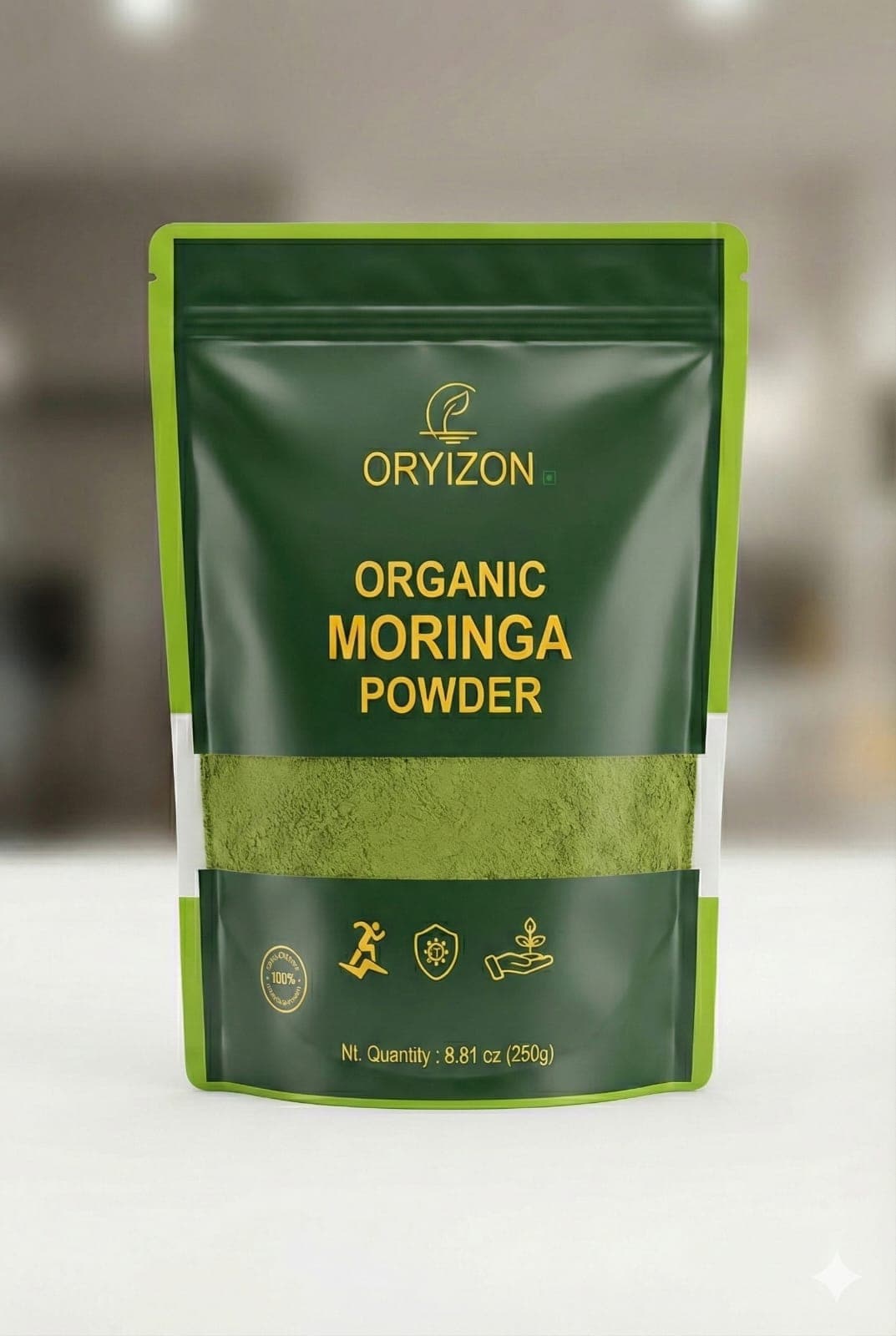
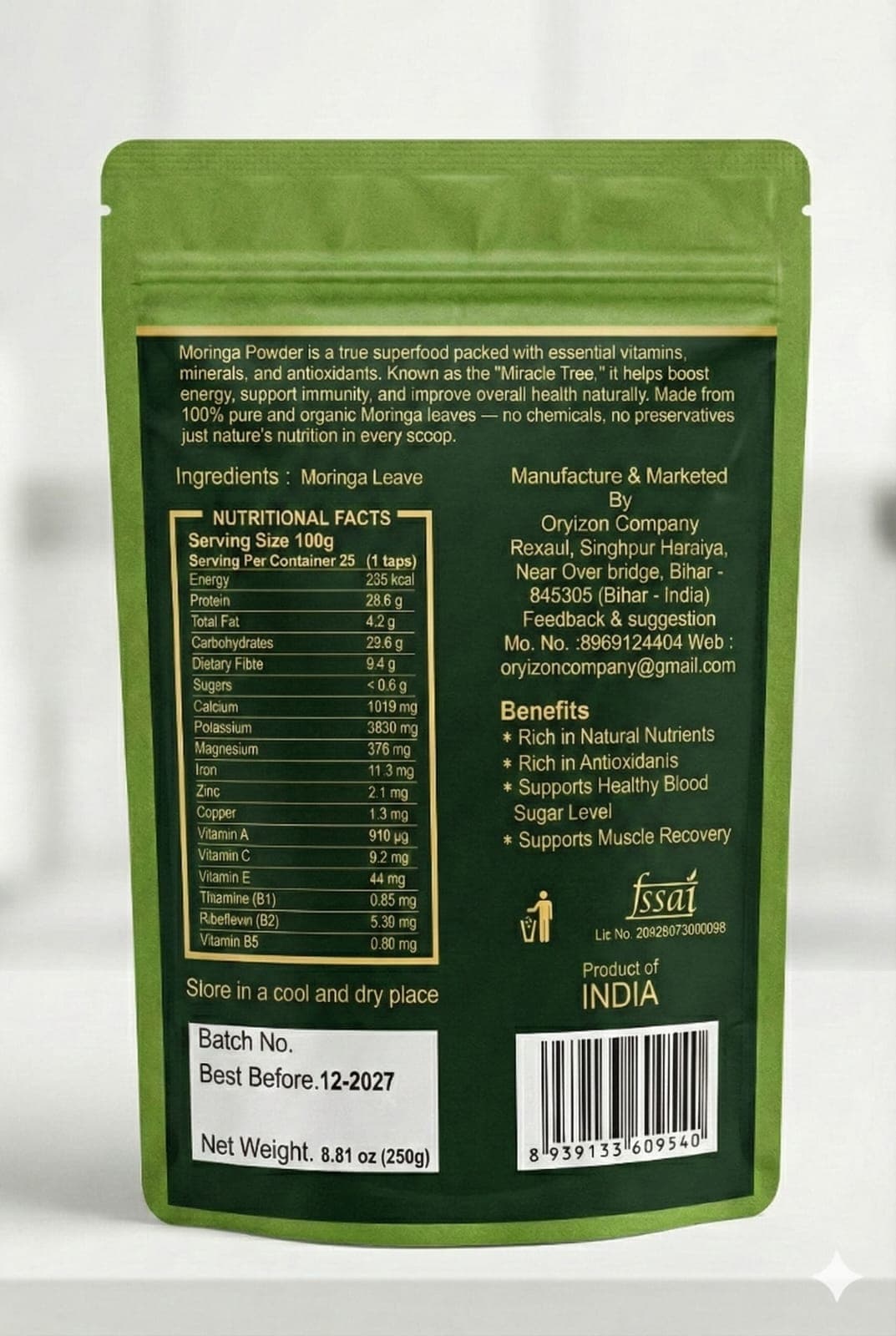
The ORYIZON Quality Standard
At ORYIZON, we understand that research-backed benefits only matter if the product you're using maintains its nutritional integrity. That's why we:
- ✓ Source from mineral-rich soils in Tamil Nadu and Rajasthan
- ✓ Harvest at peak nutritional maturity (45-60 days)
- ✓ Use traditional shade-drying to preserve heat-sensitive nutrients
- ✓ Test every batch in third-party laboratories for nutrient content
- ✓ Package in UV-protective, airtight containers
- ✓ Ensure vibrant green color — the visible marker of quality
Conclusion: From Ancient Wisdom to Modern Validation
The scientific evidence supporting Moringa oleifera is substantial and growing. While more research is needed — particularly large-scale, long-term clinical trials — the existing body of evidence suggests that Moringa is indeed a nutritionally exceptional food worthy of its "Miracle Tree" reputation.
The convergence of traditional knowledge and modern science is rare and powerful. Moringa stands at this intersection: used successfully for millennia, now validated by rigorous scientific investigation.
"We are not discovering Moringa's benefits — we are confirming what traditional medicine systems have known for thousands of years. Modern science is simply catching up to ancient wisdom." — Dr. Monica Marcu, PhD, Phytochemist
As research continues, we'll undoubtedly learn even more about how this remarkable plant can support human health and vitality. For now, the evidence is clear: Moringa deserves its place among the world's most valuable nutritional resources.
Experience the Power of Moringa
Ready to transform your wellness journey? Try our premium organic Moringa powder and feel the difference.
Shop Now